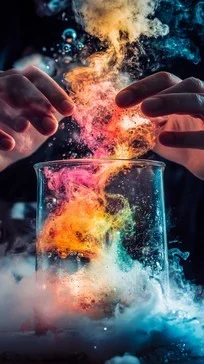
Learn what chemistry is, its definition, branches, importance, and everyday applications with
simple examples. A beginner-friendly guide.
What is Chemistry?
Have you ever wondered why iron rusts, food cooks, soap removes dirt, or ice melts into water?
At first glance, these might seem like completely different events. But they’re all connected by
one fascinating subject—chemistry.
Chemistry isn’t just something that happens inside laboratories with colorful chemicals and test
tubes. In reality, it’s happening around you every single day. From the air you breathe to the
phone in your hand, chemistry plays a role in almost everything.
Let’s explore what chemistry really is in the simplest way possible.
Chemistry
Chemistry is the branch of science that studies matter, its composition, properties, structure, and
the changes it undergoes.
In simple words, chemistry helps us understand:
● what things are made of
● How different substances interact
● Why chemical reactions happen
● How new materials are formed
Think of chemistry as the “recipe book” of the universe. Just like ingredients combine to make a
delicious meal, atoms and molecules combine to create everything around us.
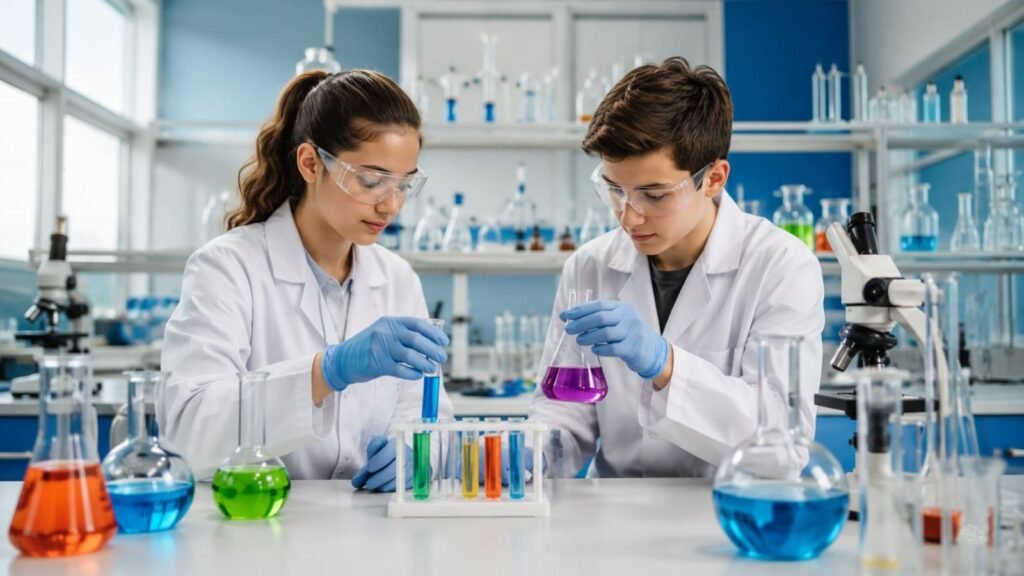
Why is Chemistry Important?
Whether you realize it or not, chemistry affects your daily routine from morning until bedtime.
Here are a few examples:
● Toothpaste protects your teeth.
● Soap removes dirt and germs.
● Medicines help treat illnesses.
● Plants grow because of chemical processes.
● Fuel powers cars and airplanes.
● Batteries run your smartphone.
Without chemistry, modern life would look completely different.
Chemistry in Daily Life
Sometimes students think chemistry only belongs in classrooms. That’s far from true.
Here are some everyday examples:
● Cooking Food
● When you boil an egg or bake bread, chemical reactions change the ingredients into
something new.
● Rusting of Iron
● A bicycle left outside in the rain slowly develops rust. That’s chemistry at work.
● Digestion
➔ Your body uses chemicals called enzymes to break down food into energy.
● Cleaning
➔ Detergents and soaps remove grease because of their chemical properties.
These examples show that chemistry isn’t just a school subject—it’s part of everyday life.

Main Branches of Chemistry
Chemistry is a broad subject, so scientists divide it into different branches.
Organic Chemistry
Studies carbon-containing compounds.
Example:
● Medicines
● Plastics
● Fuels
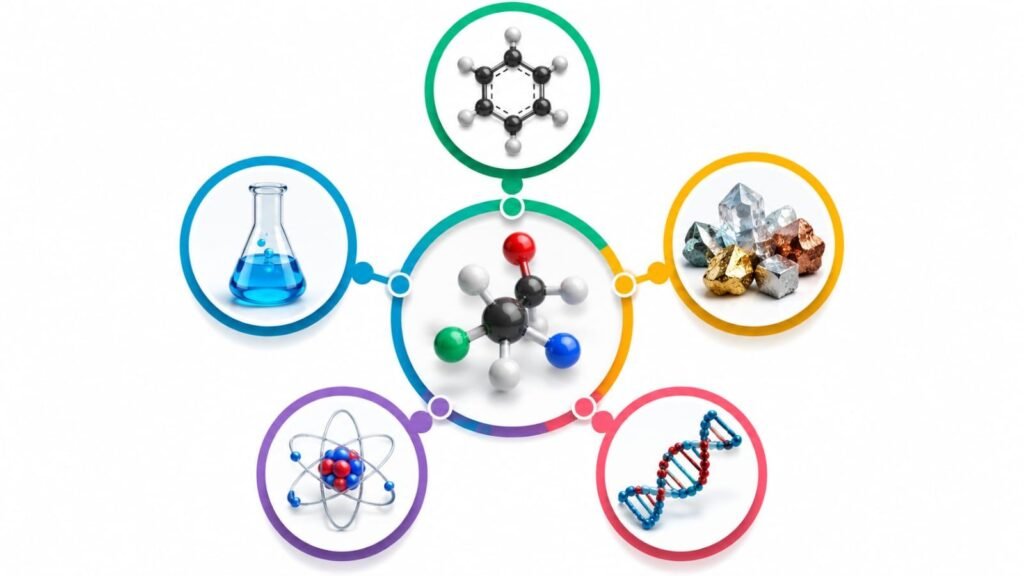
Inorganic Chemistry
Focuses on metals, minerals, and non-carbon substances.
Example:
● Salt
● Iron
● Cement
Physical Chemistry
Explains why chemical reactions happen by combining chemistry with physics.
Analytical Chemistry
Identifies and measures the components of substances.
Example:
● Testing drinking water for impurities
Biochemistry
Studies the chemical processes inside living organisms.
Example:
● Digestion, DNA, proteins, and enzymes.Whyy Should Students Learn Chemistry?
Why Should Students Learn Chemistry?
Learning chemistry develops more than scientific knowledge.
It helps students:
● Think logically
● Solve real-world problems
● Understand nature
● Prepare for careers in medicine, engineering, pharmacy, agriculture, and environmental
science.
Even if you don’t become a scientist, chemistry helps you make informed decisions in everyday
life.
Fun Facts About Chemistry
● Your body is made almost entirely of chemicals.
● Water is actually a chemical compound (H₂O).
● Diamonds and pencil graphite are both made of carbon.
● Fireworks get their beautiful colors from different chemical elements.
Every breath you take involves chemical reactions.
Anyone interested in science, medicine, engineering, pharmacy, environmental studies, or
research can benefit from studying chemistry.
Conclusion
Chemistry is much more than formulas and laboratory experiments. It’s the science that explains
how our world works—from the food we eat to the technology we use every day. Once you
begin noticing chemistry in everyday life, you’ll realize it’s everywhere.
The next time you see ice melting, bread baking, or medicine working, remember—you’ve just
witnessed chemistry in action.
One Reply to “What is Chemistry? Definition, Branches & Importance Explained”